Concern over authenticity is entirely reasonable in Indonesia's date market. Outlets like CNN Indonesia, Detik, and Tirto routinely publish guides on telling genuine dates from sugar-doctored ones before Ramadan. The good news is that for Mabroom dates, verifying authenticity is actually easier than for many other varieties — because the slender, ridged shape is hard to fake. This article covers two things: how to confirm the fruit in your hand really is the Mabroom variety, and how to confirm it has not been coated with added sugar or syrup.
Two Meanings of "Authentic" to Separate
When people search for authentic Mabroom dates, there are usually two different concerns:
- Authentic by variety — genuinely Mabroom, not some cheaper date labeled as Mabroom.
- Authentic by nature — not coated with sugar, glucose syrup, or other sweeteners to mask low quality.
Both can be checked at home. Let us start with the most distinctive: shape.
Identifying the Mabroom Variety by Its Shape
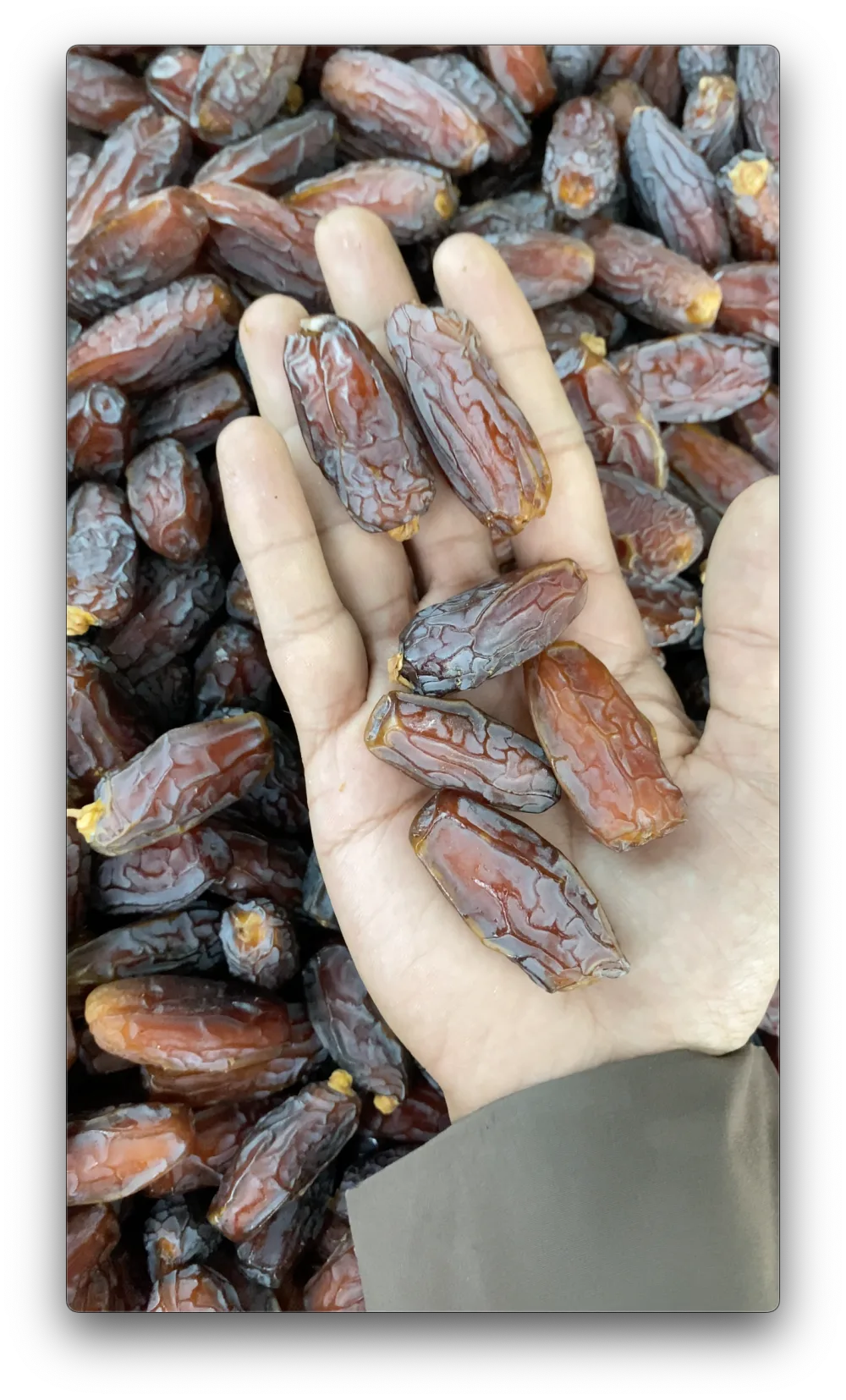
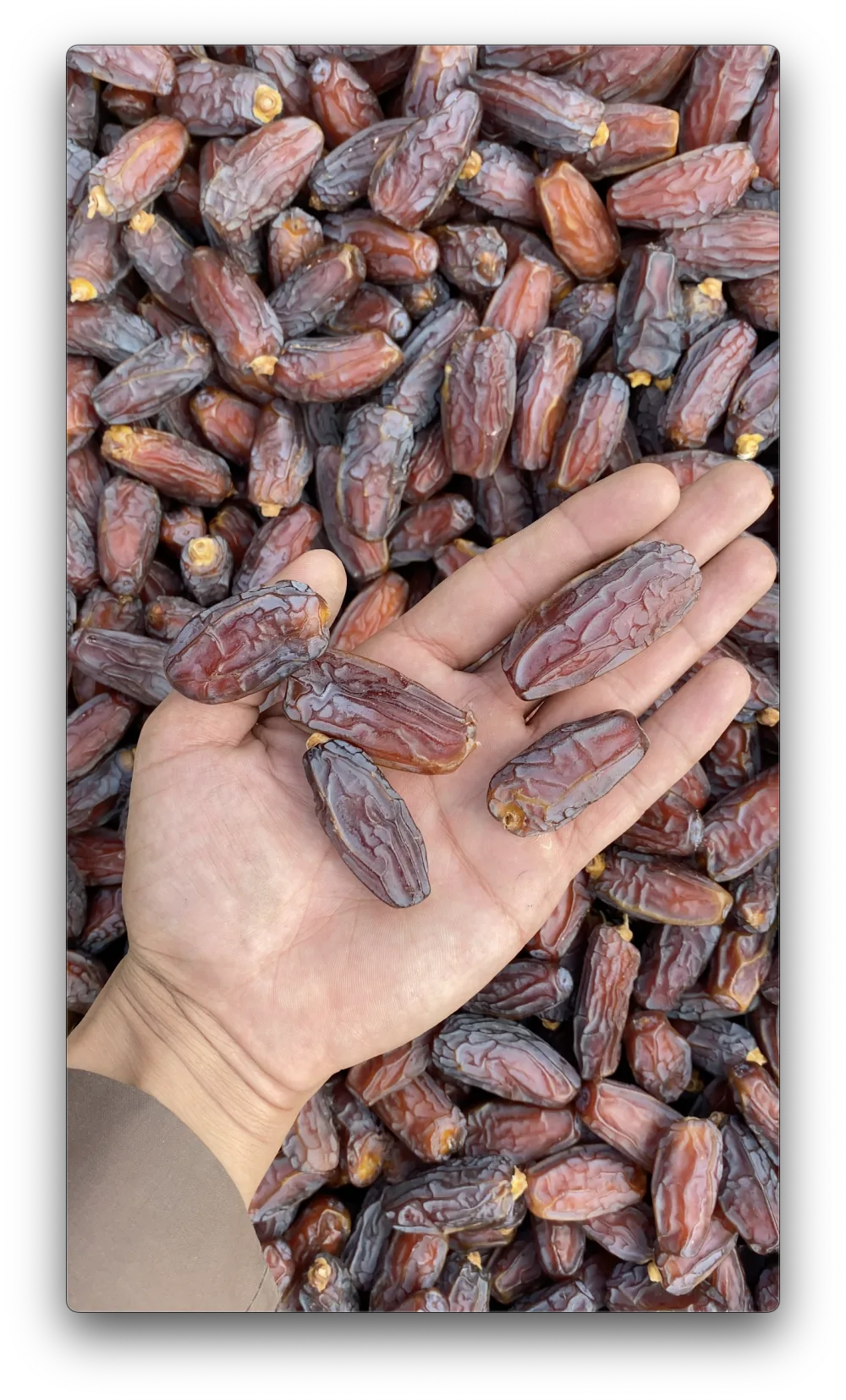
This is Mabroom's advantage. According to Wikipedia, Saudipedia, and TasteAtlas, Mabroom is a Phoenix dactylifera cultivar from the Madinah region with long, elongated fruit — physically similar to Iran's Piarom cultivar. The visual cues that are hard to fake:
- Long, slender shape with a tapered tip, about 4-6 cm long — not round like Ajwa, not plump-oval like Medjool.
- Dark mahogany skin to deep reddish-brown, with neat, fine lengthwise wrinkles.
- A ridged surface following the twisted, slender form — the name "Mabroom" is commonly linked to the Arabic word mabrūm, meaning "twisted" or "compacted".
If a "Mabroom" looks round, very plump, or short, it is most likely another variety. The slender, ridged shape is the most reliable first sign.
Telling Natural from Sugar-Doctored
Once you are confident about the variety, check whether the dates have added sweetener. Guidance from Detik and CNN Indonesia for dates in general applies to Mabroom:
| Aspect | Authentic & Natural Mabroom | Signs of Added Sweetener |
|---|---|---|
| Taste | Moderately sweet, even through to the center, caramel-toffee notes | Sharp surface sweetness, sometimes sets your teeth on edge |
| Texture | Dense, chewy, semi-dry, not overly wet | Excessively sticky, unnaturally glossy surface |
| Surface | Naturally wrinkled, dark mahogany; reasonable sheen | Oily or syrup-coated appearance, too shiny |
| Label | Ingredients: dates only | Lists sugar/glucose syrup as an added ingredient |
Important note: Mabroom is naturally less sweet than Sukari or Medjool. So if a "Mabroom" tastes very sweet and overly sticky, that is a red flag — either doctored with sweetener, or not Mabroom at all.
On the "Ant Test"
A popular myth says authentic dates do not attract ants. In reality, all sweet dates can attract ants because they genuinely contain natural sugar; this test cannot be relied on as sole proof of authenticity. More trustworthy is the combination of shape, texture, taste, and the ingredient label.
The Origin Trail: from Madinah to Jakarta
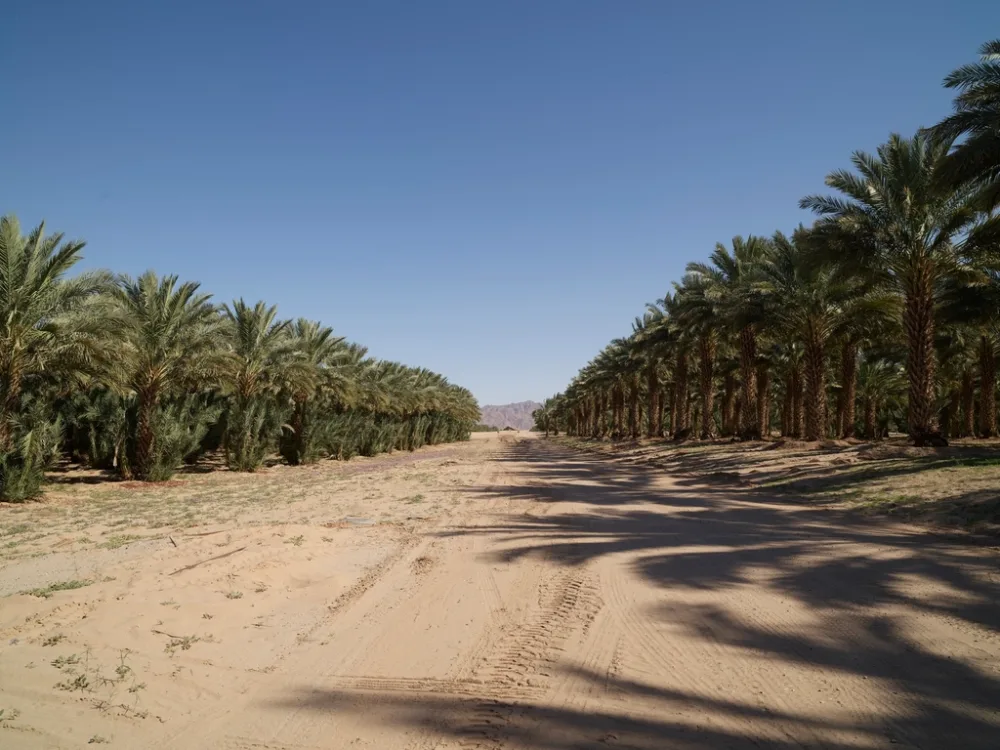
Authenticity is also about provenance. Mabroom comes from the Madinah region of western Saudi Arabia — a date basket of more than 8 million palms whose output surged 31% to over 343,000 tons in 2024, according to figures reported by regional business media. Saudi Arabia is one of Indonesia's largest date suppliers. A credible seller can usually explain its supply chain: from groves in Madinah, sorted, shipped to Jakarta's port, then re-selected. Transparency about origin — including willingness to state the stock arrival month — is a trust signal that anonymous listings cannot easily fake.
Quick Checklist Before You Buy
- Is it slender and elongated, 4-6 cm with a tapered tip? (variety)
- Is it dark mahogany with natural wrinkles, not shiny with a syrup coat? (quality)
- Is it moderately sweet, not sharp? (natural)
- Is the texture dense, chewy, and semi-dry, not wet and sticky? (freshness)
- Can the seller clearly explain its origin and grade? (credibility)
At Pondok Mabroom, we translate this principle into a Premium Grade AA Mabroom Dates selection with specifications you can verify yourself when the pack arrives — fruit length, color, moisture, and skin integrity. To us, authenticity is not a banner claim but something you can prove with your own eyes and palate.