Two Dates from the Same Land, Opposite Characters
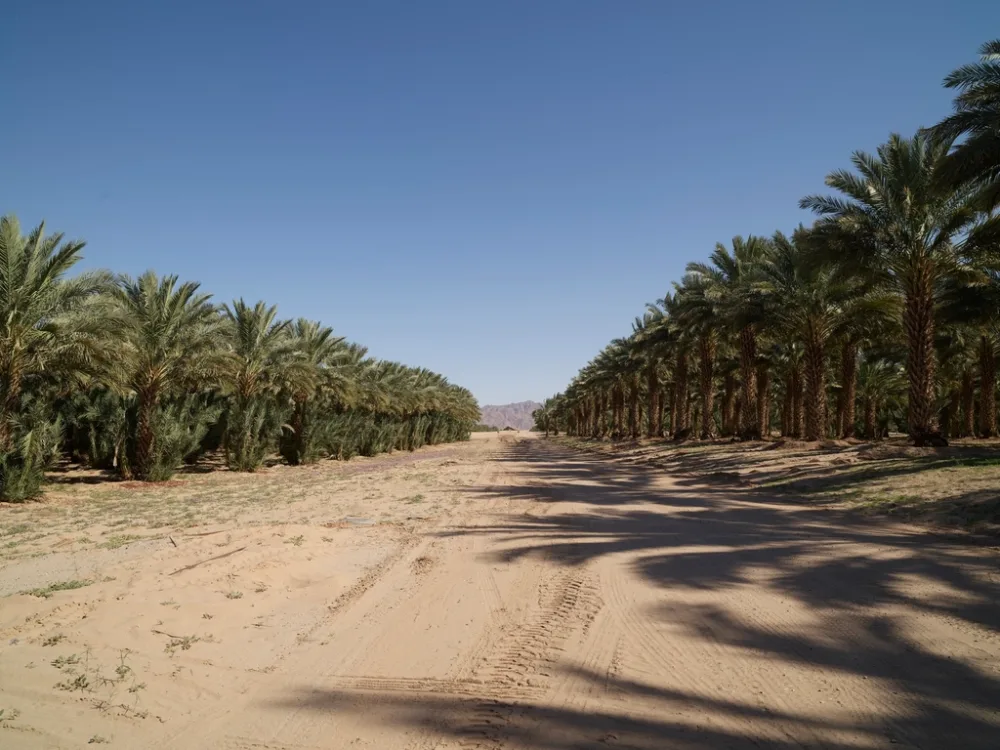
Mabroom and Ajwa are both raised in the groves of the Madinah region — a date basket of more than 8 million palms producing 343,000 tons in 2024. Beyond their shared birthplace, though, the two are nearly opposites: one slender, elongated, and caramel-toned; the other small, round, and intense. Understanding Mabroom vs Ajwa saves you from two common mistakes: paying a premium for the wrong need, or overlooking the variety that actually suits you better.
Mabroom vs Ajwa Comparison Table
| Aspect | Mabroom Dates | Ajwa Dates |
|---|---|---|
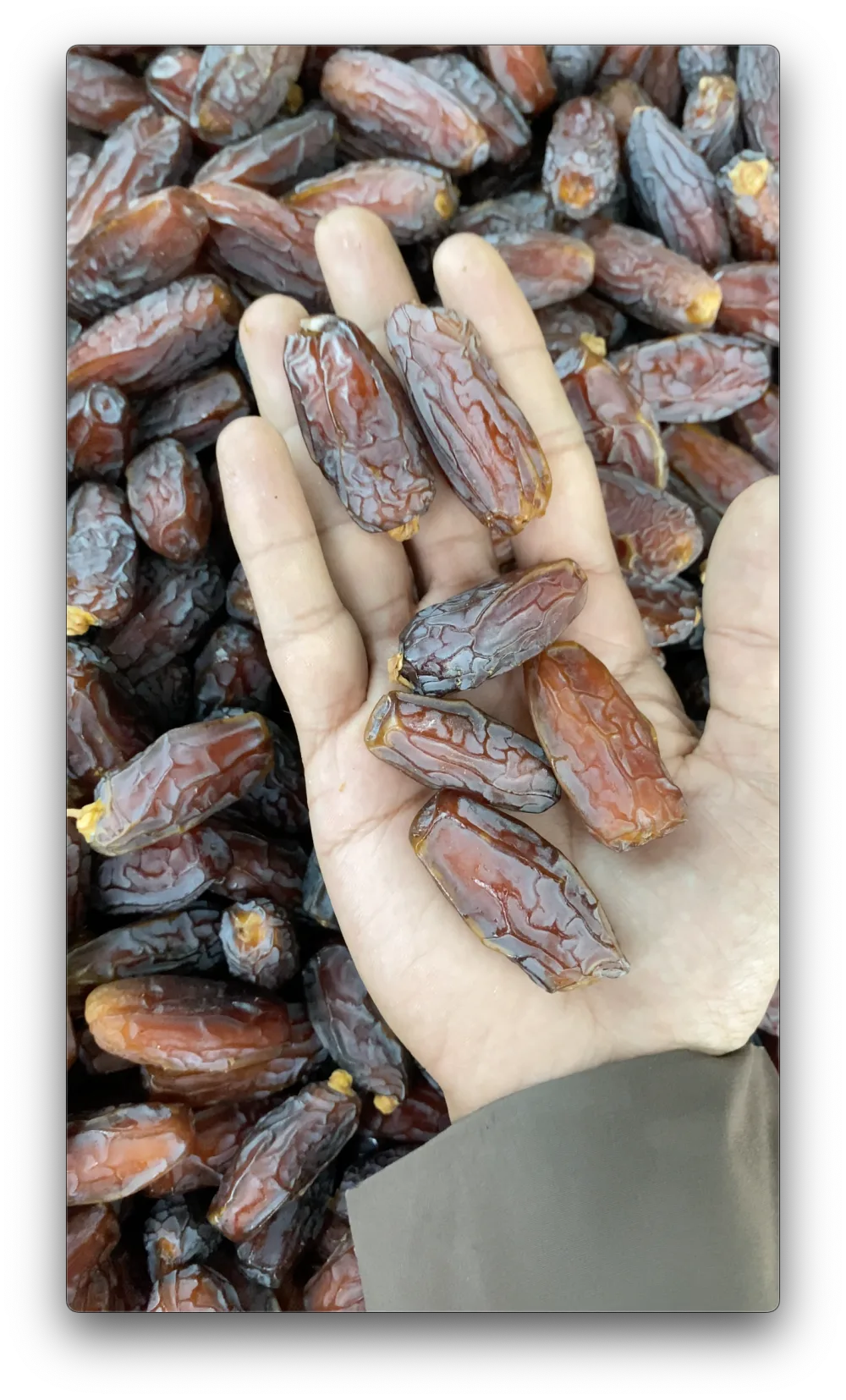
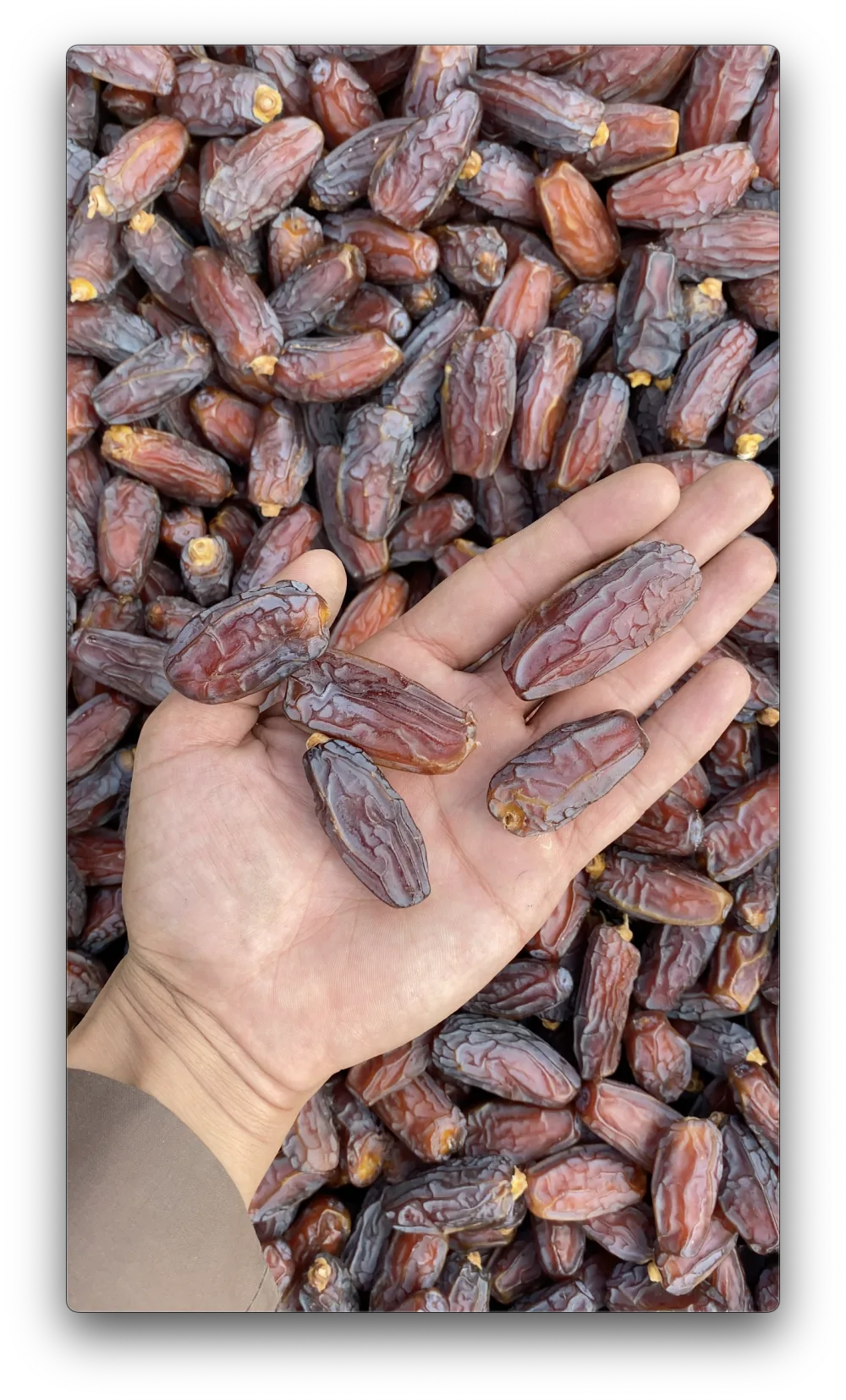
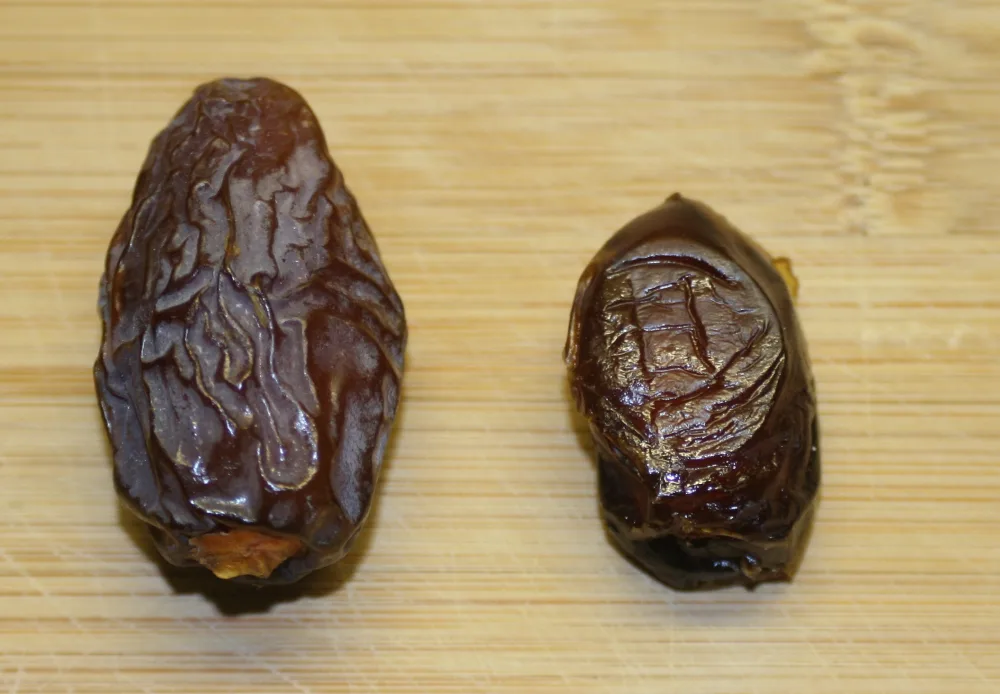
| Shape | Long and slender, 4-6 cm, tapered tip | Small, rounded-oval, short and plump |
| Skin color | Dark reddish mahogany, fine lengthwise wrinkles | Deep black with purplish cast, tight wrinkles |
| Texture | Semi-dry (±21% moisture), dense chew | Soft and tender, moister |
| Taste | Moderate sweetness, caramel-toffee notes | Gentle, deep sweetness with raisin-like hints |
| Cultural standing | Madinah's premium everyday variety | Highly revered in Islamic tradition; mentioned in hadith |
| Indonesian market price | ±Rp115-150k/kg | Typically far higher, often 2-3x Mabroom |
| Shelf life | Up to 12 months (semi-dry) | Good, but more sensitive — airtight and cool advised |
Shape and Looks: Telling Them Apart in Three Seconds
Place them side by side and the difference is instant. Mabroom is the date that looks graceful: long, lean, with fine wrinkles tracing the fruit's line — the reason it stars in gift boxes. Ajwa is its inverse: petite, nearly black, with deep, dense wrinkling. Once you have seen both, you will never confuse them again.
Taste and Texture: Chewy Caramel vs Soft Intensity
Mabroom invites you to chew: dense, springy flesh whose sweetness arrives slowly with calm caramel-toffee tones. Ajwa yields at the bite — soft, with a deep but never sharp sweetness sometimes likened to raisins. For unsweetened tea and a satisfying chewing snack, Mabroom wins; for a melt-soft mouthfeel, Ajwa takes the crown.
Cultural Standing and Price: Why Is Ajwa More Expensive?
Ajwa holds an exceptionally special place in Islamic tradition — mentioned in hadith and sought after by pilgrims — so demand runs high and its Indonesian price is often two to three times Mabroom's. Mabroom, meanwhile, is the value premium: Madinah-grown premium character and elegant looks at a price still friendly to daily family consumption. It is not about which is better — they answer different needs.
Nutrition: Broadly Similar
Whole dates broadly share a profile: dense in natural carbohydrates, high in potassium, very low in sodium (1-2 mg per 100 g per USDA baselines), and fiber-rich. Exporter data for Mabroom records 275-295 kcal, 6.5-8 g fiber, and 650-700 mg potassium per 100 g. Variety-specific health claims deserve caution — head-to-head studies between varieties remain very limited.
Which One for What?
- Economical-yet-premium daily family eating → Mabroom. Friendlier pricing for a 3-4 date daily portion per person.
- A religiously meaningful gift or special offering → Ajwa, tradition's most revered variety.
- A gift box that photographs beautifully → Mabroom; its slender fruit arranges stunningly.
- A chewy desk-and-tea companion → Mabroom; the dense texture lasts.
- Lovers of deep, soft sweetness → Ajwa.
The Right Moment for Each
After the table and the theory, down to daily life. Mabroom shines in routine moments: an office snack that will not melt in the bag, an afternoon-meeting companion replacing fried snacks, a children’s treat whose sweetness stays modest, and a monthly stock that does not make the wallet wince. Ajwa shines in meaningful moments: an offering for parents, a homecoming gift after umrah, a present for a religious teacher, or a special serving when honored guests arrive. Many Jakarta families end up keeping both — Mabroom in the daily jar, Ajwa in the cupboard for guests — and that is not extravagance but correct placement.
Buying Tips: Avoiding Mistakes and Mix-Ups
- Check shape first, label second. Slender and elongated means Mabroom; small, round, and dark means Ajwa. Labels can be misapplied; shapes cannot lie.
- Distrust odd prices. Ajwa priced as cheap as Mabroom is almost certainly not Ajwa; premium-labeled Mabroom far below Rp100k/kg deserves grade questions.
- Ask for photos of the actual fruit from the batch that will ship, not generic catalog images.
- Buy from sellers who publish specifications — fruit size, moisture, origin — because a seller bold enough to write specs can be held to them.
Finally, storage: both prefer airtight containers in a cool spot. Semi-dry Mabroom tolerates room temperature for months, while moister Ajwa should move to the chiller if it will not be finished quickly. Keep them in separate jars so aromas and moisture do not cross over.
The Bottom Line
Mabroom and Ajwa are not rivals but two answers to two different questions. If you want an elegant, chewy, sensibly priced premium date for every day, Mabroom is hard to beat. Pondok Mabroom stocks grade AA to jumbo Mabroom, from 250g packs to 10kg cartons, delivered same-day from Cakung across Jakarta, Bekasi, Depok, Tangerang, and Bogor.